




Key Takeaways
A smart warehouse elevates inventory management through comprehensive digital technology and automated systems. Its core components include warehouse management systems (WMS), an AS/RS System (Automated Storage and Retrieval System), and IoT sensors. This transformation allows businesses to process orders more rapidly, maximise vertical storage space, reduce long-term operational costs, and eliminate human error, thereby enhancing sustainable competitiveness.
When discussing stock management, the traditional image that often comes to mind is piles of paperwork and staff walking down aisles searching for goods on shelves. Today, however, these scenes are being replaced by cutting-edge technology, fully elevating facilities into smart warehouses. But before making this leap, what must business owners know, and what elements are required for this transition? As we look towards the trends of industrial automation for warehousing in 2026, this article provides the answers.
What Is Smart Warehouse Technology?
If you are wondering what smart warehouse technology is, it is a warehouse or distribution centre that integrates digital technology and automation to manage various processes from upstream to downstream. Rather than relying on manual labour for record-keeping or driving forklifts to locate goods, this system connects all data via the internet and software.
The primary goal of transitioning to a smart warehouse is not merely to have robots roaming around for a futuristic appeal. Instead, it equips businesses to manage stock more accurately, operate faster, and minimise errors. This ensures the facility is well-prepared to handle fluctuating order volumes efficiently at all times, effectively navigating the typical pros and cons of smart warehouse logistics.
Essential Components That Make a Warehouse Intelligent
Transforming a standard warehouse beyond its traditional limitations requires more than just purchasing a single piece of machinery. It involves creating a seamlessly connected technological ecosystem. Three core innovations are acting as the foundational pillars that drive this flawless synchronisation:
1. Warehouse Management System (WMS)
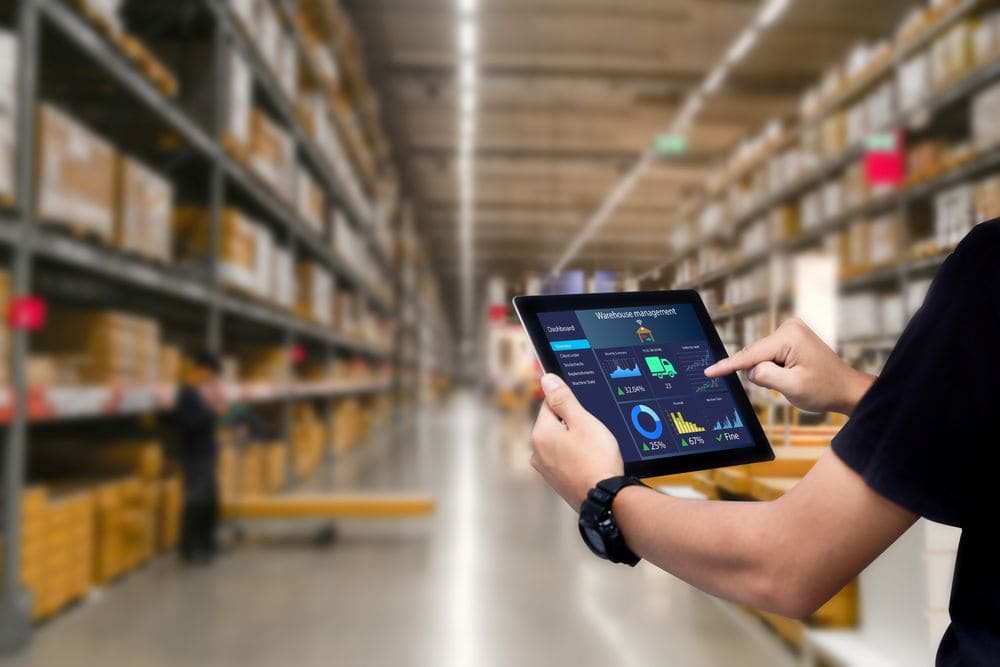
If a warehouse system were a human body, the WMS software would be the “central brain” controlling and directing all internal activities. This system is responsible for recording all inbound and outbound inventory data, analysing the most suitable vacant spaces for storage, and even planning the routing of warehouse vehicles for maximum speed. All data is processed and displayed in real-time, allowing management to view the overall picture and make precise problem-solving decisions.
2. Automated Storage and Retrieval System (AS/RS)
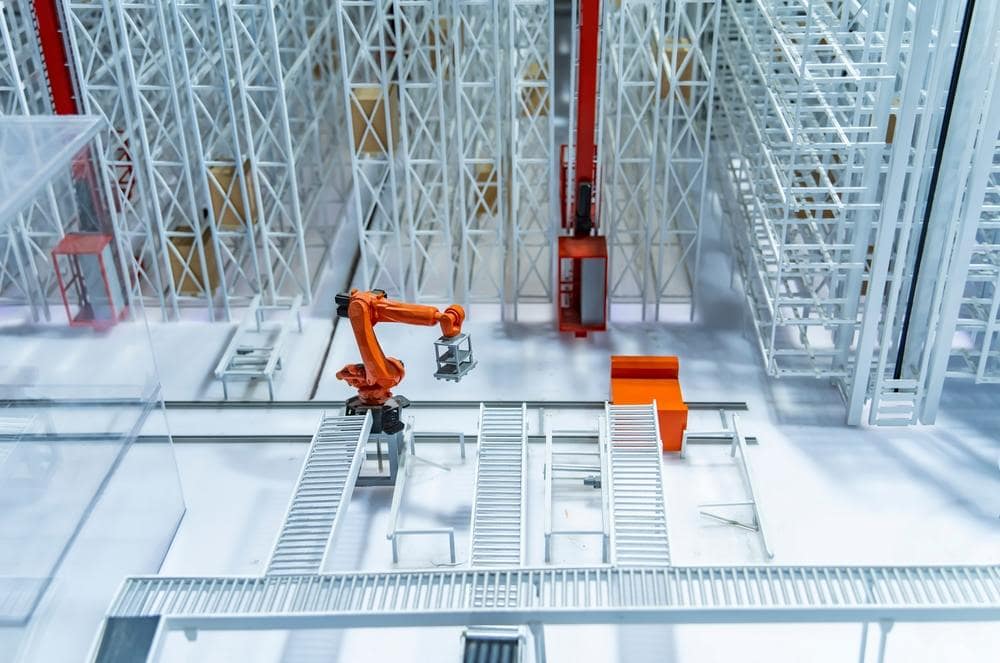
While the WMS acts as the brain, the AS/RS System is the powerful and rapid “limbs”. This technology utilises automated cranes, shuttles, or conveyor systems to replace staff walking or operating forklifts. The machinery travels to pick and store goods at accurately specified coordinates, reducing operational time manifold and effectively breaking through the limitations of human labour.
3. Sensors and IoT (Internet of Things) Devices
This is the “nervous system” that links everything together. By embedding smart sensors or RFID (Radio Frequency Identification) chips in various locations, whether on the products themselves, on shelving, or within the robots, the warehouse can communicate data autonomously without waiting for human data entry. This enables us to track product statuses and locations, as well as control crucial factors such as temperature and humidity in climate-controlled facilities, in real-time, 24 hours a day.
The Benefits of Implementing a Smart Warehouse in the Industrial Sector
Investing in automated storage systems provides more than just a modern image; it directly impacts a business’s profitability and growth. Understanding the smart warehouse benefits and challenges, along with the overall pros and cons of smart warehouse adoption, is essential to fully leveraging these advantages:
- Accelerated Order Fulfilment: Automated systems ensure that the searching and picking processes occur in the blink of an eye. Products can be packed and dispatched to customers much faster.
- Maximising Vertical Space Utilisation: Traditional shelving height limitations are eliminated, as AS/RS systems can safely access extremely high storage tiers. This allows for a greater volume of goods to be stored within the same footprint.
- Reducing Long-Term Operational Costs: Although it requires an initial investment, this system significantly cuts hidden costs, including staff overtime and product damage, while increasing operational cycles cost-effectively.
How Does a Smart Warehouse Reduce Human Error?
The limitations of human fatigue are unavoidable, but automated systems are designed to plug this gap effectively:
- Accuracy in Inventory Counting and Management: Using scanning systems in tandem with WMS ensures that stock data is always updated and accurate, eliminating issues with stockouts or overstocking.
- Enhanced Precision in Picking and Sorting: The system automatically categorises and navigates to the correct items, reducing the chances of picking the wrong order to absolutely zero.
- Improving Safety and Reducing Workplace Accidents: Assigning high-risk tasks to machinery, such as lifting excessively heavy loads or working at great heights, creates a much safer working environment.
Overcome Traditional Limitations and Transform Your Business With Smart Solutions From Tellus
Insufficient storage space, inventory discrepancies, picking errors, and delays caused by relying solely on manual labour are all “hidden costs” that stunt business growth. Allowing your warehouse to remain outdated in an era where customers demand maximum speed can easily result in lost opportunities and falling behind competitors.
If you wish to elevate your warehouse management to its highest efficiency while effectively balancing the smart warehouse benefits and challenges, Tellus offers state-of-the-art warehouse automation systems designed to alleviate space and labour constraints.
By integrating material handling automation systems, you can increase your competitive edge using world-class technology aligned with the future of industrial automation for warehousing in 2026. For more details, please contact us via LINE: @679gdcxi or Tel: 02-643-8044-8
References:
- smart warehouse. Retrieved on 30 June 2026, from https://www.techtarget.com/iotagenda/definition/smart-warehouse
- Smart Warehouse: Definition, Benefits, and Challenges. Retrieved on 30 June 2026, from https://www.inboundlogistics.com/articles/smart-warehouse/
- Smart warehouse: A bibliometric analysis and future research direction. Retrieved on 1 July 2026, from https://www.sciencedirect.com/science/article/pii/S2667344423000063
Frequently Asked Questions of Smart Warehouse (FAQs)
Q: What are the smart warehouse pros and cons of automation?
A: When evaluating the pros and cons of a smart warehouse, businesses should consider the following:
- Pros: Increased accuracy, optimal use of vertical storage space, rapid order processing, reduction of tedious issues caused by human error, and lower long-term operational costs.
- Cons: High initial investment budgets are required, and staff must undergo training to fully understand and operate the new software systems.
Q: What are some real-world examples of smart warehouse applications?
A: A clear example can be seen in the large distribution centres of e-commerce platforms, which use AMR (Autonomous Mobile Robots) to lift and transport shelving units directly to staff. Another example is the food and beverage industry, where automated storage systems are used in cold rooms to prevent staff from working in sub-zero temperatures for extended periods.
Q: What are the core technologies driving an intelligent warehouse?
A: Indispensable warehouse technologies include WMS software, autonomous robots and guided vehicles (AGV/AMR), automated cranes and racking systems (AS/RS), barcode scanning or RFID technology, and IoT sensors for data transmission.
Q: Can medium-sized businesses adapt to use these systems?
A: Absolutely. Businesses do not need to transition to 100% robotics all at once. They can start on a smaller scale, such as implementing WMS software alongside barcode scanners, before expanding to use conveyor belts or other automated systems as the business grows.